
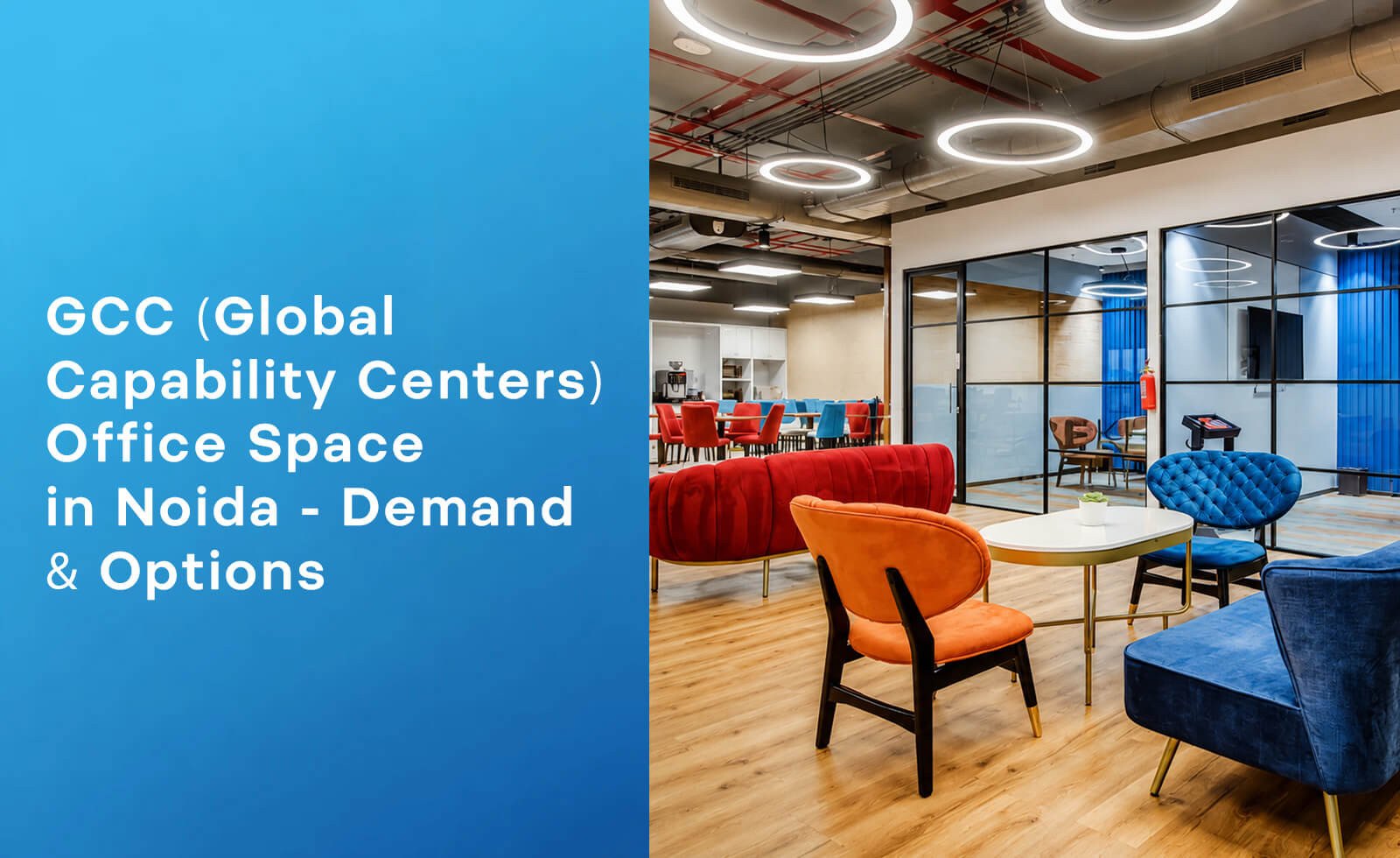
GCC (Global Capability Centers) Office Space in Noida - Demand & Options

Global Capability Centers have quietly become one of the biggest demand drivers in Noida's commercial real estate market. What used to be simple back-office outsourcing has evolved into something far more strategic - multinational companies building full-scale engineering, analytics, R&D, and product teams inside their own dedicated Indian entities. And a growing share of that demand is landing in Noida, not just Bengaluru or Hyderabad.
If you're evaluating Noida as a GCC location - whether you're setting up your first 50-seat pilot or scaling an existing center to 500+ people - this guide breaks down why Noida has become a serious GCC destination in 2026, what office formats and sectors work best, real cost expectations, and the practical checklist for choosing the right space.
What Is a GCC, and Why Does It Need a Different Kind of Office?
A Global Capability Center (GCC) is owned offshore unit that a multinational company sets up to run core functions in-house - product engineering, R&D, data and analytics, cybersecurity, finance operations, or customer platforms - rather than outsourcing them to a third-party vendor. Unlike a traditional BPO or a small satellite office, a GCC is built for long-term, high-headcount, high-security operations.
That distinction matters enormously when it comes to office space. A GCC typically needs:
- Scale - capacity to grow from a 50-person pilot to 300, 500, or 1,000+ seats over a few years.
- Data security and compliance infrastructure - controlled access, dedicated server rooms, and often client-specific compliance certifications.
- Brand and identity control - the ability to build out the space to reflect the parent company's global design standards, not a shared Coworking aesthetic.
- Operational continuity - 24/7 or near-24/7 uptime for internet, power backup, and building access to support global time-zone operations.
- Long-term lease stability - GCCs are rarely short-term bets; a 5-9 year lease horizon is common.
This is fundamentally different from what a 10-person startup or a small regional sales office needs, which is why GCC real estate decisions usually involve a different shortlisting process from the start.
Why Noida Is Emerging as a Serious GCC Hub
Delhi NCR now hosts roughly 270 GCC centers, accounting for close to 15 to 18 percent of the country’s GCC ecosystem, with Noida forming one of the region’s key clusters alongside Gurugram. A few structural factors explain why global companies keep shortlisting Noida specifically:
1. Cost efficiency versus Tier-1 metros. Noida consistently offers commercial Properties rentals that run nearly 50% lower than those in Bengaluru or Mumbai, which meaningfully changes the economics of a large, long-term GCC lease.
2. A dedicated state policy push. The Uttar Pradesh Global Capability Centres Policy 2024 offers capital subsidies of up to 25%, along with stamp-duty waivers and operational subsidies on power and cloud services, specifically designed to attract large GCC investments into Noida, Lucknow, and Varanasi.
3. A deep and growing talent base. Noida’s proximity to academic institutions gives GCCs access to a steady engineering and technology talent pipeline, while North India’s linguistic diversity and strong background in financial services and telecom make it well suited to both back-office analytics and customer-facing operations.
4. Real momentum, not just intent. Since 2022, GCCs have leased over 53 million sq. ft. of commercial space across India, with a meaningful share landing in Noida. Established names like Honda and Maruti Suzuki already run GCCs in Noida, and newer large-format commitments continue to land - including an R&D-focused center in Noida’s Phase-II sector backed by roughly ₹1,000 crore in investment, spread over a seven-acre campus expected to create around 500 direct jobs.
5. Infrastructure catching up fast. Metro expansion, the Noida-Greater Noida Expressway, and the upcoming Noida International Airport (Jewar) are steadily closing the infrastructure gap with more established GCC hubs, while a wave of new Grade-A office supply is coming online specifically to serve this demand.
Office Space Options for GCCs in Noida
GCCs don't fit neatly into a single office format - the right choice usually depends on the stage of the center.
1. Managed Offices (Best for Pilot and Early-Stage GCCs)
For companies testing the Noida market with a first team of 30-100 people, a managed office is typically the fastest path to operational. The operator handles fit-out, facilities, and day-to-day maintenance, letting a GCC go live in weeks rather than months. This format is well suited to pilot centers where the parent company wants to validate talent availability and delivery quality before committing to a larger, longer lease.
2. Fully Furnished Offices (Mid-Scale, Direct Control)
Once a GCC has proven its model and is scaling toward 100-250 seats, many move to a fully furnished, directly leased floor - giving more control over branding, layout, and security protocols while still avoiding the capital cost of a full ground-up build-out.
3. Bare Shell / Custom Built-to-Suit Campuses (Large-Scale, Long-Term GCCs)
For GCCs planning 300+ seats over a 5-9 year horizon, a bare shell lease or a dedicated built-to-suit facility is usually the end state. This allows full control over floor plate design, security architecture, server rooms, and global brand standards - the same approach large GCCs have taken elsewhere in Noida, where fully owned, multi-floor, purpose-built facilities are increasingly common for long-term operations.
4. Integrated Corporate Parks and IT/ITES SEZs
A growing number of GCCs are opting for integrated business parks that combine office towers with F&B, fitness, and community amenities on campus - recognizing that modern GCCs increasingly need integrated corporate parks blending workspace with recreational and lifestyle amenities to support talent retention. Noida’s established IT/ITES corridors in Sectors 62 and 63 already offer this kind of ecosystem, and it’s becoming a baseline expectation rather than a bonus feature.
Best Sectors in Noida for GCC Setups
Sector 62 Noida - Noida's most established IT/ITES corridor, home to large business parks and towers like I-Thum. Strong Blue Line metro connectivity, high building density, and a mature vendor and F&B ecosystem make this a natural first choice for GCCs prioritizing talent access and brand visibility.
Sector 63 Noida - An industrial-turned-commercial belt directly adjacent to Sector 62, offering large-floor managed and fully furnished formats at comparatively efficient price points - well suited to GCCs scaling past 100-150 seats without needing full custom build-outs immediately.
Sector 132 and the Noida Expressway corridor - A hub for newer Grade-A development, increasingly targeted at large-format, long-lease occupiers including GCCs looking for built-to-suit or bare shell campuses.
Noida Phase-II and YEIDA corridor - With large-scale R&D investments already landing here and expressway and metro connectivity to both Delhi and Lucknow, this corridor is positioning itself for the next wave of large-format, long-horizon GCC campuses, particularly in technology, semiconductors, and data infrastructure.
Realistic Cost Expectations for a GCC in Noida
GCC real estate costs scale very differently from a typical startup office lease, since space, security infrastructure, and lease tenure are all larger. As a working framework:
Rent per sq. ft. in Noida’s core IT/ITES sectors is meaningfully lower than in Bengaluru, Mumbai, or even Gurugram’s premium corridors, which is precisely why operating a GCC in Noida can run 20-30% cheaper than in other metros once you factor in real estate, talent costs, and operational overheads together. For a large bare shell floor plate, the lower per-sq.-ft. rent needs to be weighed against fit-out costs, which for GCC-grade infrastructure (server rooms, access control, redundant power) typically run higher than a standard corporate fit-out due to the added compliance and security layers.
What GCCs Should Prioritize When Choosing Office Space
Picking a GCC location isn't just a real estate decision - it's an operational and talent-retention decision. A few factors matter more here than in a typical corporate office search:
1. Security and compliance infrastructure. For GCCs handling sensitive data or regulated workflows, physical and digital security measures are non-negotiable, and the building itself needs to support controlled access, CCTV coverage, and dedicated server room provisioning from day one.
2. Scalability within the building or park. Since most GCCs grow well beyond their initial headcount, it's worth confirming whether additional floors or adjacent space are available for expansion within the same building or campus - renegotiating and relocating a growing GCC every 18 months is expensive and disruptive.
3. Social and lifestyle infrastructure nearby. Employee retention in GCCs is closely tied to surrounding amenities - cafes, gyms, healthcare access, and childcare options near the office measurably affect talent retention in high-pressure GCC roles.
4. Sustainability credentials. Green-certified buildings (LEED or IGBC) are increasingly a requirement for global parent companies with sustainability mandates, and they also tend to lower long-term operational costs through energy efficiency.
5. Hybrid-ready floor plans. With most global GCCs now running hybrid models, flexible seating, hot-desking zones, and strong virtual collaboration infrastructure are becoming standard requirements rather than nice-to-haves.
6. Connectivity for a 24/7 operating model. Many GCCs run shifts aligned to US, European, or APAC business hours. Proximity to metro lines and expressways, along with reliable late-night transport and security arrangements, directly affects a center's ability to staff round-the-clock operations.
7. Policy and incentive alignment. Before finalizing a location, it's worth checking eligibility under the Uttar Pradesh GCC Policy 2024 - capital subsidies, stamp-duty waivers, and power/cloud subsidies can materially change the economics of a large, long-term lease.
Common Mistakes Companies Make When Setting Up a GCC in Noida
- Undersizing the initial footprint. GCCs almost always grow faster than the original headcount plan - leasing without headroom for the next 2-3 years of hiring often forces an expensive, disruptive relocation.
- Treating it like a standard corporate lease. GCC infrastructure requirements (security, redundancy, compliance) are different from a typical corporate office, and building this into the lease and fit-out plan late is costly to retrofit.
- Underestimating build-out timelines for bare shell/custom spaces. Large, security-heavy fit-outs take considerably longer than a standard office build-out - plan lead times accordingly before committing to a go-live date.
- Ignoring the surrounding talent ecosystem. A sector with lower rent but weak connectivity or limited nearby amenities can quietly undermine hiring and retention over a multi-year GCC lifecycle.
- Not benchmarking against the state's incentive policy. Many companies finalize a lease without fully evaluating available subsidies under the UP GCC Policy 2024, leaving meaningful savings on the table.
Finding the Right GCC Office Space in Noida
Because GCC requirements span everything from a 50-seat managed office to a 70,000+ sq. ft. custom campus, the search process looks different from a standard office hunt - it usually requires comparing multiple formats, sectors, and building grades side by side. OfficeKhoj lists verified commercial properties across Noida's established IT/ITES corridors, including Sector 62 and Sector 63, with filters for property type, area, seat capacity, and infrastructure amenities like power backup, security, and parking - making it easier to shortlist buildings that can support both a pilot-stage GCC and its future scale-up, without sector-by-sector cold calling.
Final Thoughts
Noida's GCC story in 2026 isn't a side trend - it's one of the strongest demand drivers reshaping the city's commercial real estate market. With cost advantages of 20-30% over other major metros, a dedicated state incentive policy, deepening talent infrastructure, and a fast-expanding supply of Grade-A office space for rent in Noida, has moved firmly into serious contention alongside Bengaluru, Hyderabad, and Gurugram for global capability center investment. The companies getting this right aren't just chasing the lowest rent per sq. ft. - they're matching their GCC's growth trajectory, security needs, and talent strategy to the right building, sector, and lease structure from day one.
Frequently Asked Questions about GCC (Global Capability Centers)
1. What is a Global Capability Center (GCC), and how is it different from a regular office?
A GCC is a wholly owned offshore unit that a multinational company sets up to run core business functions in-house - such as engineering, analytics, or R&D - rather than outsourcing them. It differs from a standard office primarily in scale, security requirements, and long-term lease horizon.
2. Why are companies choosing Noida for GCC setups over Bengaluru or Gurugram?
Noida offers meaningfully lower commercial rents than Bengaluru or Mumbai, a dedicated Uttar Pradesh GCC policy with capital and stamp-duty incentives, strong expressway and metro connectivity, and a growing supply of Grade-A office space suited to large, long-term occupiers.
3. Which sectors in Noida are best suited for GCC offices?
Sector 62 and Sector 63 remain the most established choices due to their IT/ITES ecosystem and connectivity, while Sector 132, the Noida Expressway corridor, and the YEIDA/Noida Phase-II belt are emerging as hubs for newer, large-format GCC campuses.
4. How much office space does a GCC typically need in Noida?
It depends on the stage: a pilot GCC with 30-100 seats typically needs 4,000-10,000 sq. ft., a scaling center with 100-300 seats needs 10,000-30,000 sq. ft., and an established GCC with 300+ seats often requires 30,000-70,000+ sq. ft., sometimes in a dedicated built-to-suit campus.
5. Is it cheaper to run a GCC in Noida compared to other Indian cities?
Yes - operating a GCC in Noida can be roughly 20-30% cheaper than in other major metros once real estate, talent, and operational costs are considered together, largely due to lower commercial rents and state-backed incentives.
6. What government incentives are available for GCCs setting up in Noida?
The Uttar Pradesh Global Capability Centres Policy 2024 offers capital subsidies of up to 25%, stamp-duty waivers, and operational subsidies on power and cloud services for eligible new and expanding GCCs.
7. Should a GCC choose a managed office or a bare shell space in Noida?
Managed offices are better suited for pilot-stage GCCs that need to go live quickly with minimal upfront investment, while bare shell or built-to-suit spaces make more sense for established GCCs planning 300+ seats over a 5-9 year horizon who need full control over security and layout.
8. What amenities matter most for GCC employee retention in Noida?
Beyond core office infrastructure, proximity to metro connectivity, cafes, gyms, healthcare facilities, and integrated business park amenities significantly affect employee retention in GCC roles, particularly for centers running extended or hybrid shift patterns.
Please Login to Comments
Login